
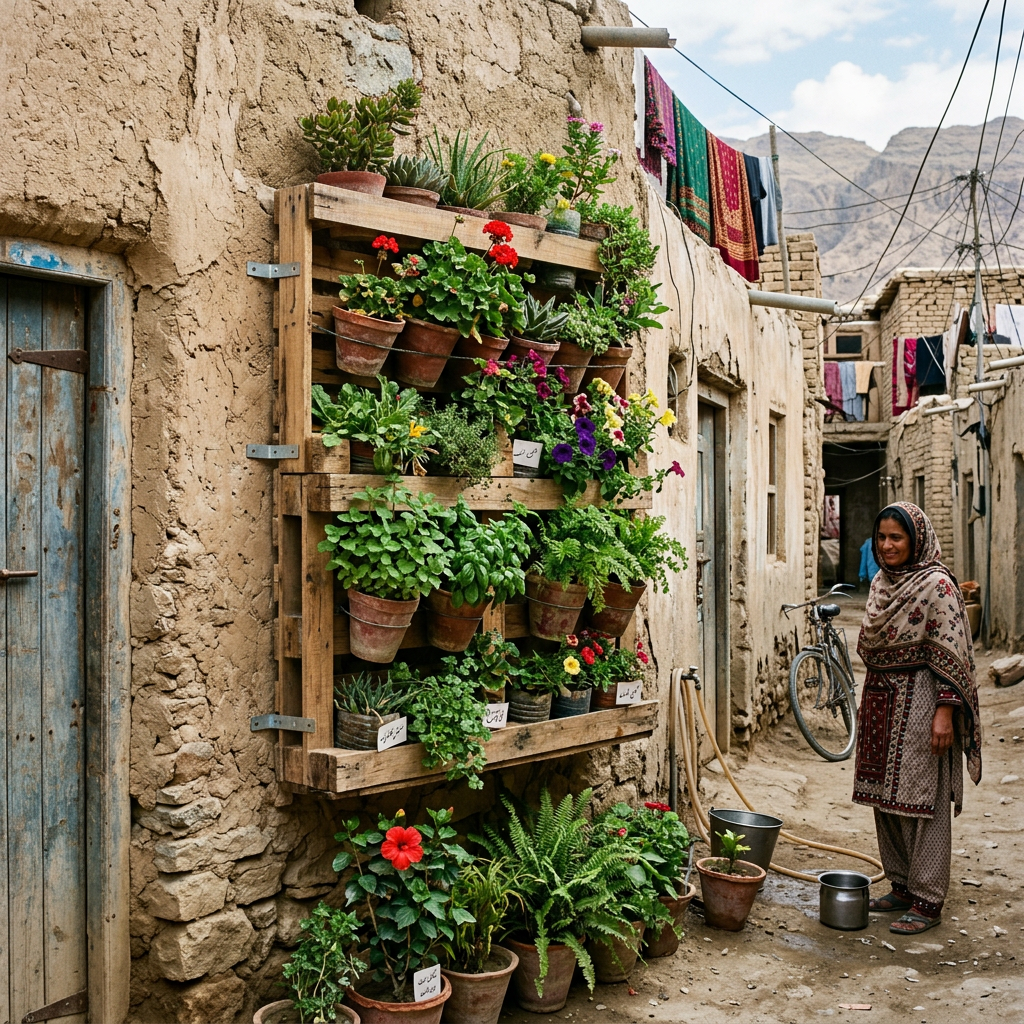
Vertical Pallet Gardening for Urban Food Security in Arid Regions
RBWRP is of the opionon that every concrete walls are hiding a massive, untapped food source, even in this blistering heat. Most urban gardens wither in arid climates, but we’ve engineered a recycled pallet system that turns water scarcity into a surplus. Watch how gravel-lined reservoirs and wicking fabrics create a self-sustaining oasis on a budget.

The Urban Drought Crisis
In 2026, global heatwaves are rewriting the rules of urban living. Traditional soil beds fail under relentless sun, leaving city dwellers vulnerable to food insecurity. Concrete jungles absorb heat, magnify drought, and suffocate the possibility of fresh produce.
Why Horizontal Gardening Fails
Flat soil beds demand space and water—two luxuries arid cities can’t afford. The failure rate is staggering. But vertical timber structures, built from recycled pallets, flip the equation. They save space, conserve water, and thrive where traditional gardens collapse.
Yield Per Drop – The New Gold Standard
In arid climates, every drop counts. Our gravel-lined reservoirs and wicking fabrics channel water directly to plant roots, shielding leafy greens from harsh sunlight. This system doesn’t just grow food—it maximizes yield per drop, redefining food sovereignty for urban communities.
Transformation in Action
Imagine barren concrete walls reborn as lush, vertical micro-farms. Modular, recycled timber systems turn scarcity into abundance. With minimal cost and maximum resilience, families can harvest fresh greens year-round—even in the harshest droughts.
Call to Action
Urban food security isn’t a dream—it’s a design choice. Vertical pallet gardening proves that with creativity and recycled materials, together with RBWRP we can bridge the gap between water scarcity and nourishment. Join the movement. Build resilience. Grow food where none existed before. Check out the demo below installed by RBWRP funded by EU.


🌱 DIY Guide: Vertical Pallet Gardening for Urban Food Security in Arid Regions
Objective: Transform concrete walls into self‑watering micro‑farms using recycled pallets, gravel reservoirs, and wicking fabrics.
Materials Needed
- Recycled wooden pallet (heat‑treated, not chemically treated)
- Landscaping fabric or wicking cloth
- Gravel or small stones
- Potting mix (light, water‑retentive)
- Heat‑tolerant leafy greens (spinach, kale, arugula, mustard greens)
- Nails, screws, or staple gun
- Waterproof container or reservoir (optional for extra water storage)
Step‑by‑Step Instructions
Prepare the Pallet.

Get the pallet ready for vertical gardening.
- Sand down rough edges to prevent splinters
- Stand the pallet vertically against a wall or fence
- Ensure stability before adding soil
Line with Wicking Fabric

- Staple landscaping fabric inside the pallet slats.
- Ensure fabric overlaps to hold soil securely.
Create Gravel Reservoirs

- Fill the bottom section with gravel.
- This acts as a mini water reservoir, reducing evaporation.
Add Soil Layers

- Place potting mix above the gravel.
- Press gently to secure the soil in vertical slots.
Plant Leafy Greens

- Insert seedlings into gaps between slats.
- Choose heat‑tolerant varieties for arid climates.
Watering System

- Pour water slowly from the top.
- Wicking fabric distributes moisture evenly to roots.
Sunlight & Placement

- Position pallet where it gets partial sunlight.
- Avoid direct harsh afternoon sun—use shade cloth if needed.
Maintenance

- Refill gravel reservoir weekly.
- Trim mature leaves to encourage regrowth.
- Rotate crops seasonally for continuous yield.
💡 Pro Tip: This system maximizes yield per drop—perfect for drought‑prone cities. One pallet can sustain a family’s supply of fresh greens with minimal water.